
Maybe you wake up tired — not just physically, but in that deeper way that rest never seems to fix. Maybe you find yourself reacting to things with an intensity that surprises even you, or pulling away from people you love without fully understanding why. Maybe you’ve been carrying something for so long that it’s started to feel like just who you are. It isn’t. And you don’t have to keep carrying it alone.
Trauma therapy in Nashville, TN has grown into a robust, evidence-based field — and yet so many residents are still quietly searching for answers, unsure where to begin or whether what they’ve experienced even “counts.” It counts. Every single bit of it counts.
Simply Being Therapy is a warm, boutique trauma-informed psychotherapy practice serving adults, couples, and families across Nashville. Their approach is anything but one-size-fits-all — it’s built around you, your nervous system, your history, and your goals. In this guide, we’ll walk through what trauma actually is, how therapy helps, the modalities Simply Being uses, and what it looks like to begin the process of healing — step by careful step.
Understanding Trauma: What It Is and Why It Stays With Us
Trauma is one of the most misunderstood words in the mental health conversation. Ask most people what trauma is, and they’ll think of war, disasters, or serious accidents — the dramatic, undeniable events that clearly “justify” distress. But trauma is far broader, far more common, and far more quietly influential than most of us realize. Understanding what it actually is — and why it persists — is the first step toward believing that healing is genuinely possible.
At its core, trauma is not about what happened to you. It’s about what happened inside you as a result. Clinically, trauma falls into several overlapping categories. Acute trauma refers to a single, overwhelming event — a car crash, an assault, an unexpected loss. Chronic trauma describes prolonged or repeated exposure to distressing circumstances — ongoing abuse, neglect, or living in a persistently unsafe environment. And complex trauma, perhaps the most nuanced category, encompasses multiple layered experiences over time, often beginning in childhood, that compound and interweave in ways that can be difficult to untangle without skilled support.
What’s important to understand is that trauma exists on a wide and deeply personal spectrum. Some experiences are immediately recognizable as traumatic — combat exposure, sexual assault, surviving a natural disaster. Others are quieter and more cumulative: chronic emotional neglect, growing up with a parent who was never quite present, a workplace environment that slowly eroded your sense of self, or relationships that left you believing you were fundamentally too much or not enough. These experiences rarely announce themselves as “trauma.” They accumulate over time, shaping your nervous system and your sense of the world in ways that are just as real, just as worthy of care, and just as deserving of healing as any other experience.
There is no hierarchy of suffering in a trauma-informed space. What matters is not how your experience compares to someone else’s — it is how it has affected you. If something has left a mark on your nervous system, your relationships, or your sense of self, it deserves to be taken seriously. Full stop.
Why the Body Holds On
Here’s what makes trauma particularly complex: it’s not just a memory. It’s a physiological event. When your nervous system perceives a threat — real or perceived — it activates the fight-flight-freeze-fawn response, flooding your body with stress hormones designed to protect you. In healthy circumstances, once the threat passes, the nervous system returns to baseline. But when an experience is overwhelming enough, or when the threat is repeated without resolution, the nervous system can get stuck. The alarm stays on. The body stays braced.
This is why trauma survivors often describe feeling constantly on edge, easily startled, emotionally numb, or disconnected from their own bodies — long after the original event has passed. It’s not weakness. It’s not a personality flaw. It is the nervous system doing exactly what it was designed to do, except that it never received the signal that the danger was over. This is also precisely why simply “talking yourself out of it” is rarely enough — because trauma lives in the body, not just the mind.
Nashville residents experience this at disproportionate rates. According to NAMI Tennessee’s state fact sheet, 43.5% of adults in Tennessee reported symptoms of anxiety or depression — a sobering local anchor for a challenge that too many people face in silence. And the Nashville Community Health + Well-being Survey continues to highlight the gap between mental health need and accessible, quality care in this city.
Trauma affects everyone — adults navigating the aftermath of old wounds, couples whose connection has been strained by individual or shared experiences, families carrying patterns from one generation into the next. And crucially, it affects people who would never think to label what they’ve been through as “trauma.” If you’ve been wondering why certain situations feel impossibly charged, why you can’t seem to stay present in relationships, or why anxiety or depression seems woven into your daily experience — this may be exactly the context you’ve been missing.
Understanding this isn’t meant to overwhelm you. It’s meant to offer something far more useful: a framework. Because once you understand why trauma persists, you can begin to understand how therapy actually resolves it.
What Trauma Therapy Is — And How It Actually Helps
If you’ve typed “trauma therapy Nashville” into a search bar and felt immediately uncertain about what would actually happen if you called a therapist — you’re not alone. The idea of therapy can feel abstract, intimidating, or even frightening when what you’re carrying already feels like too much. So let’s clear something up right away: trauma therapy is not about being forced to relive the worst moments of your life. It is not about sitting across from someone who nods silently while you cry for fifty minutes. And it is absolutely not about being told that what you feel is wrong.
Trauma therapy is a category of specialized, evidence-based psychotherapeutic approaches designed to help your mind and body process, integrate, and ultimately heal from traumatic experiences. The emphasis on process and integrate is important. The goal isn’t to erase your past or pretend it didn’t happen. The goal is to help your nervous system finally receive the message it never got: it’s over. You’re safe. You can put it down.
What “Trauma-Informed” Actually Means
At the heart of effective trauma therapy is a framework called trauma-informed care — and it’s more than a buzzword. A trauma-informed approach means that every aspect of the therapeutic experience is designed around five foundational principles: safety, trust, choice, collaboration, and empowerment. This is the philosophy at the core of Simply Being Therapy’s approach. It means you are never pushed faster than you can go. It means the therapeutic relationship itself is part of the healing. It means your voice, your pace, and your sense of agency are respected at every step.
What the First Session Actually Looks Like
If you’ve never been to therapy before, the first session can feel like a leap into the unknown. In reality, it’s usually the gentlest part of the process. A first session at a trauma-informed practice is primarily about intake and establishing safety — your therapist getting to know you, understanding what’s brought you in, learning about your history at whatever level of depth feels comfortable, and beginning to build the kind of trust that makes deeper work possible. Nothing is forced. Nothing is demanded. You are in the driver’s seat.
From there, therapy unfolds in a way that’s tailored to you specifically. The Simply Being Therapy services page reflects the breadth of this individualized care — from individual sessions to couples and family work to specialized programs like Ketamine-Assisted Psychotherapy. There is no single script.
Who Benefits From Trauma Therapy?
The honest answer is: more people than most would expect. Adults processing events from their past — recent or decades old. Couples whose intimacy and connection have been strained by individual trauma or shared experiences. Families navigating the reverberations of dysfunction, loss, or generational pain. People dealing with PTSD, anxiety, depression, chronic stress, or major life transitions. People who don’t quite know what is wrong, only that something is.
Common questions people bring to a first session include: “Will I have to relive everything?” (No — good trauma therapy is carefully titrated to your window of tolerance.) “Is it safe for me?” (Yes — a skilled trauma therapist’s first job is always your safety.) “How long does it take?” (It varies — but you’ll work collaboratively with your therapist to set realistic goals.) For more of these questions answered directly, Simply Being Therapy’s FAQs page is a genuinely helpful starting point before your first call.
The American Psychological Association’s overview of trauma-informed psychotherapy affirms what decades of research have demonstrated: structured, evidence-based trauma therapy produces meaningful, lasting change. Not just symptom management — actual healing. And in Nashville, that level of care is closer than you might think.
Now that you understand what trauma therapy is and why it works, the next question is equally important: which approaches does Simply Being Therapy use — and why do they work so well?
Holistic, Evidence-Based Trauma Therapy Modalities at Simply Being Therapy
What sets a truly exceptional trauma therapy practice apart from the rest isn’t just warmth or good intentions — it’s clinical depth. It’s the ability to meet each client with the right tool at the right time, drawing from a rich toolkit of evidence-based approaches rather than applying the same method to every person who walks through the door. Simply Being Therapy’s holistic trauma therapy in Nashville spans five core modalities, each of which addresses trauma from a distinct and complementary angle.
Somatic Experiencing: Healing Through the Body
Developed by Dr. Peter Levine — author of Waking the Tiger and one of the most influential trauma researchers of the modern era — Somatic Experiencing (SE) is built on a deceptively simple insight: trauma is stored in the body, and the body must be part of its resolution. SE works by gently helping clients track physical sensations — the tightness in the chest, the holding of breath, the heaviness in the limbs — and gradually approaching traumatic material in small, manageable doses, a process called titration.
Rather than plunging into traumatic content and risking retraumatization, SE helps the nervous system complete the biological responses that trauma interrupted. The shaking after a car accident that you “white-knuckled through” to seem composed. The tears that never came. SE gives the body permission to finish what it started — and in doing so, restores a sense of safety and groundedness that can feel almost miraculous to someone who has lived in a state of chronic tension for years.
This approach is particularly transformative for clients who feel stuck in their body — those dealing with hypervigilance, dissociation, chronic physical tension, or unexplained somatic symptoms. Simply Being’s clinicians hold post-graduate training and certification in SE through Somatic Experiencing International, one of the field’s most respected training bodies.
EMDR: Rewiring the Brain’s Response to Memory
Eye Movement Desensitization and Reprocessing (EMDR) is one of the most extensively researched trauma therapies in existence — and one of the most misunderstood. Yes, it involves eye movements. But EMDR is not a parlor trick. It is a structured, eight-phase protocol that uses bilateral stimulation (alternating eye movements, tapping, or auditory tones) to help the brain reprocess traumatic memories that have become “frozen” in the nervous system.
Here’s the key insight: traumatic memories aren’t stored like regular memories. They’re held in a raw, unintegrated state — which is why recalling them can feel as vivid and overwhelming as the original event. EMDR helps the brain do what it naturally does during REM sleep: process, contextualize, and integrate. After successful EMDR, clients often describe the same memory feeling distant, neutral, or factual rather than emotionally activating — the memory is still there, but its charge has dissolved.
EMDR is endorsed by both the American Psychological Association and the U.S. Department of Veterans Affairs as a gold-standard treatment for PTSD. It is particularly effective for single-incident trauma, phobias, and PTSD — and increasingly used for complex trauma and chronic stress as well.
Internal Family Systems: No Bad Parts
Internal Family Systems (IFS), developed by Dr. Richard Schwartz, offers one of the most compassionate frameworks in all of psychotherapy. Its core premise is that the human mind is naturally made up of distinct “parts” — an inner critic, a wounded child, a protector who works overtime to keep pain at bay — and that these parts, no matter how disruptive their behavior, are all trying to help you. There are no bad parts. Only parts that took on difficult jobs in difficult circumstances.
In IFS therapy, the goal is not to silence or eliminate the parts that cause distress, but to understand them, build a relationship with them, and ultimately lead them from a place of calm, compassionate Self — an inner resource that trauma therapy helps you rediscover. For adults dealing with complex or developmental trauma, shame, self-criticism, or deep-seated emotional patterns, IFS can be transformative in ways that more surface-level approaches simply cannot reach.
The IFS Institute — Dr. Schwartz’s own organization — provides extensive research and training resources, and the growing body of clinical evidence supporting IFS for PTSD and trauma continues to expand year on year.
Attachment-Focused Therapy: Healing Relational Wounds
We are shaped, profoundly, by our earliest relationships. Attachment-Focused Therapy is rooted in the work of John Bowlby and later expanded by researchers like Mary Ainsworth and Dan Siegel. It explores how the quality of our early caregiving relationships creates internal templates — working models — for how we expect others to treat us, how safe it is to be vulnerable, and how we regulate our emotions in relationship.
When those early templates were formed in environments of inconsistency, neglect, emotional unavailability, or outright harm, the effects ripple forward — into adult relationships, parenting, and self-perception. Attachment-Focused Therapy helps clients identify these patterns, understand their origins, and — crucially — begin to revise them. New, safe relational experiences (including the therapeutic relationship itself) can literally reshape these neural pathways.
This modality supports both individual work and couples and family therapy, making it central to Simply Being’s ability to serve clients across the full relational spectrum.
Ketamine-Assisted Psychotherapy: An Emerging Frontier
Perhaps the most cutting-edge offering in Simply Being Therapy’s clinical toolkit is Ketamine-Assisted Psychotherapy (KAP) — an emerging, evidence-informed approach that combines carefully supervised ketamine medicine sessions with skilled psychotherapeutic support. Ketamine, administered in a controlled and legal clinical context, temporarily creates a state of heightened neuroplasticity — a window of openness in which the brain is unusually receptive to new perspectives, insights, and emotional processing.
The medicine session itself is only part of the process. What makes KAP truly therapeutic is the preparation before and the integration work after — guided by Simply Being’s trained clinicians who help clients make meaning of and anchor whatever arises during the experience. According to Psychiatric Times, KAP has demonstrated particular promise for treatment-resistant depression, PTSD, and chronic trauma — conditions that have not responded adequately to conventional approaches.
Simply Being has a dedicated KAP program page that walks prospective clients through the process in detail. For those who want to explore further through reading, the practice’s KAP resource library offers a curated collection of in-depth articles on ketamine-assisted psychotherapy — from how the medicine works to what integration looks like in practice. It is a rich and honest body of writing from clinicians who are genuinely engaged with this work.
Understanding these five modalities in depth illuminates something important: healing doesn’t happen in a single lane. It happens at the intersection of mind, body, memory, and relationship — and Simply Being is equipped to meet clients at all of those intersections. With that foundation laid, let’s turn to one of the most common — and most quietly carried — forms of trauma that brings people through the door.
Healing Childhood Trauma in Adulthood: It’s Never Too Late
What if the anxiety you’ve struggled with your whole life wasn’t a character flaw — but an old wound that finally has a name?
That question lands differently for different people. For some, it’s a relief. For others, it opens up a complicated mix of grief, anger, and cautious hope. But for the many adults quietly seeking childhood trauma therapy in Nashville, it is often the beginning of something genuinely life-changing.
Childhood trauma is not limited to the experiences that are obviously recognized as abuse. Its spectrum is far wider — and far more common — than most people realize. It includes physical and sexual abuse, yes. But it also includes emotional neglect (parents who were physically present but emotionally unavailable), household dysfunction (growing up with a parent struggling with addiction or mental illness), bullying, early or significant losses, medical trauma, chronic instability, and the quiet but devastating experience of never quite feeling safe, seen, or enough. These experiences don’t require dramatic defining moments to leave lasting marks.
How Childhood Trauma Shows Up in Adulthood
The most disorienting thing about childhood trauma is how it hides in plain sight. It rarely announces itself as “trauma” in adult life. Instead, it shows up as:
- Anxiety that seems disproportionate to circumstances, or that you’ve simply always lived with
- Difficulty trusting others — or swinging between over-trusting and defensive withdrawal
- Chronic shame — a bone-deep sense of being fundamentally flawed or unworthy
- Emotional dysregulation — reactions that feel bigger than the moment, or a complete inability to access your emotions at all
- Self-sabotage in relationships, careers, or personal goals
- Physical symptoms — chronic pain, fatigue, gut issues — that medical providers can’t fully explain
These are not personality defects. They are adaptations. Brilliant, understandable, protective strategies that your nervous system developed when you were small and had no other options. The problem is not that these adaptations existed — it’s that they often outlive their usefulness and begin to cost you more than they protect you.
Why “Getting Over It” Isn’t the Answer
One of the most painful myths surrounding childhood trauma is the idea that time heals all wounds, or that an adult who is “still affected” by childhood experiences is somehow weak or self-indulgent. Neuroscience tells a very different story. Early trauma — particularly experiences that occurred before language fully developed — is encoded in deep, implicit memory structures that are not easily accessible to conscious reasoning. This is why you can intellectually know that you are safe while your body is still behaving as though you aren’t. It’s not a failure of willpower. It’s neurobiology.
Somatic Experiencing International’s SE-101 resource explains beautifully how SE specifically addresses pre-verbal and early developmental trauma — precisely because it works through the body’s felt experience rather than requiring clients to verbally narrate what happened. For many survivors of early trauma, this is the first approach that has ever reached the wound at its actual depth.
Similarly, IFS is uniquely suited to healing developmental trauma because it creates a safe, compassionate relationship between the adult’s core Self and the younger parts still carrying old pain. Research published via the IFS Institute validates this approach for PTSD, including trauma originating in childhood.
And here’s the truth that matters most: the brain retains neuroplasticity throughout life. Healing is not only possible — it happens, consistently, with the right support. You are not too old. It is not too late. The wounds you’ve been carrying for decades can be worked with, gently and skillfully, by clinicians who understand both the science and the humanity of what you’ve been through.
“Trauma is not what happens to you. It’s what happens inside you as a result of what happens to you.” — Gabor Maté, The Myth of Normal
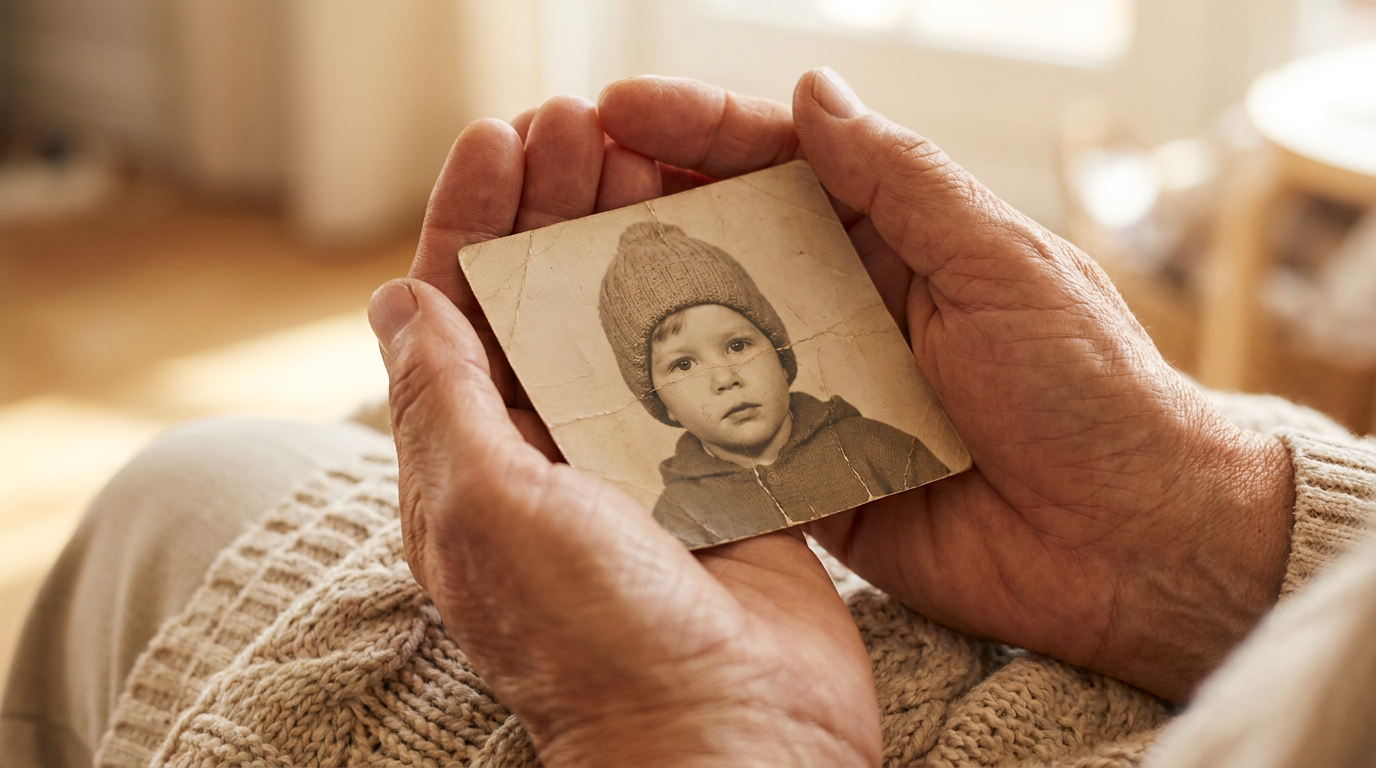
The Simply Being Therapy team approaches each client’s story with exactly this kind of compassionate, individualized attention — never rushing, never forcing, always following the client’s own pace and readiness. Healing from childhood trauma doesn’t mean your past is erased. It means it no longer runs the show.
And of course, that healing rarely stays contained to the individual. Childhood trauma shapes how we show up in our most intimate relationships — which brings us to one of the most important and often overlooked dimensions of trauma work.
Relationship and Family Trauma Therapy in Nashville: Healing Together
Trauma is rarely, if ever, a purely private experience. It lives in our nervous systems, yes — but it also lives in our relationships. The way we learned (or didn’t learn) to trust, to fight, to repair, to be vulnerable, to seek comfort, or to withdraw from it — all of this was shaped by early relational experiences, and all of it plays out, often with stunning fidelity, in our adult partnerships and families.
Relationship trauma therapy in Nashville addresses this directly. And Simply Being Therapy’s work with couples and families is rooted in the understanding that you cannot fully separate an individual’s healing from the relational ecosystem in which they live.
When Individual Trauma Enters Relationships
Imagine a couple where one partner grew up with emotionally unavailable caregivers and developed an anxious attachment style — always scanning for signs of rejection, needing constant reassurance, interpreting a partner’s quiet evening as abandonment. The other partner grew up in a chaotic household and learned that the safest thing to do when tension rose was to disengage, go quiet, go internal. In isolation, each adaptation makes perfect sense. Together, they create a cycle that can feel maddening — one partner reaching, the other withdrawing; escalation, distance, rupture, repair, and back again.
This is not a communication problem. It is a nervous system problem. And attachment-informed couples therapy works precisely at this level — helping partners understand each other’s nervous systems, not just their behaviors. It shifts the frame from “Why do you always do this?” to “What happens inside you when this happens?” — and that shift changes everything.
Research published in Frontiers in Psychology confirms the deep relationship between attachment patterns and trauma outcomes, validating the importance of addressing relational dynamics as part of comprehensive trauma treatment.
Betrayal, Infidelity, and Relational Rupture
Not all relational trauma comes from childhood. Sometimes it arrives in the form of infidelity, betrayal, or a sudden rupture in a relationship that felt secure. These experiences can be acutely traumatizing — disorienting in a way that challenges a person’s fundamental sense of safety and self. Couples navigating these wounds need a therapeutic environment that is simultaneously structured and gentle, that creates enough safety for both partners to show up honestly without the session becoming another site of harm.
Simply Being’s couples work, described on their services page, is designed with exactly this in mind — safety-focused, attachment-informed, and deeply respectful of both partners’ experience.
Family Therapy: Breaking Generational Patterns
For families, trauma therapy offers something particularly profound: the possibility of interrupting cycles. Parents who understand their own trauma responses are less likely to unconsciously transmit them to their children. Families who build shared language around emotions and nervous system states become more resilient together. And for households where trauma has affected the entire family system — through a loss, a crisis, or longstanding dysfunction — family therapy provides a container in which everyone’s experience can be honored and the system can begin to heal as a whole.
Nashville’s rapid growth as a city brings its own relational stressors worth naming. Career pressure, relocation stress, the loss of established community, financial anxiety — these modern pressures amplify relational strain and lower the threshold at which couples and families hit crisis points. The Simply Being groups and events offerings reflect a recognition that healing is sometimes most powerful in community — that witnessing others’ courage can catalyze your own.
The therapeutic relationship itself — the safe, consistent, boundaried connection between client and clinician — is often described by clients as the most healing element of therapy. For those whose earliest relationships taught them that closeness was dangerous or conditional, experiencing a relationship that is reliably safe and attuned is not just supportive. It is, in the most literal sense, corrective.
Understanding the relational dimensions of trauma naturally leads to a very practical question: what does it actually look like to begin outpatient trauma therapy in Nashville?
What to Expect From Outpatient Trauma Therapy in Nashville
For many people, the logistics of starting therapy are one of the final barriers standing between where they are and where they want to be. Questions about time, commitment, format, cost, and process pile up and can make the first step feel harder than it needs to be. So let’s demystify this, practically and honestly.
Outpatient trauma therapy means exactly what it sounds like: regular, scheduled therapy sessions that fit into your existing life. No inpatient stay. No disruption to work, family, or daily routine. Sessions are typically held weekly or biweekly — 50 to 90 minutes in length depending on the modality and your specific treatment plan — and take place either in-person at Simply Being’s Nashville office or via telehealth, depending on your preference and circumstances.
The General Arc of Trauma Therapy
While every client’s journey is genuinely unique, trauma therapy tends to unfold through three broad phases — not a rigid protocol, but a useful roadmap:
Phase 1 — Safety and Stabilization: Before diving into traumatic material, you and your therapist build the foundation. This means establishing trust, developing coping and regulation skills, and creating a felt sense of safety — both in the room and in your daily life. This phase is not “pre-therapy.” It is therapy, and it matters enormously.
Phase 2 — Trauma Processing: With a stable foundation in place, deeper processing becomes possible. Depending on your modality (SE, EMDR, IFS, or a combination), this phase involves gently approaching and working through the traumatic material — not re-experiencing it uncontrolled, but processing it in carefully titrated doses within a safe container.
Phase 3 — Integration and Growth: As the trauma’s charge dissolves, life begins to reorganize around its absence. Old patterns shift. Relationships change. New capacities emerge. This phase is about consolidating gains, deepening insight, and stepping into a version of yourself that is no longer defined by what happened to you.
Simply Being’s Individualized Model
What distinguishes Simply Being Therapy’s approach is that this arc is never imposed — it’s co-created. Your clinician works with you to build a treatment plan that reflects your specific history, your nervous system’s needs, your goals, and your pace. The boutique model of practice means you’re not a chart number in a large clinical system. You’re a person being cared for by a highly trained, genuinely engaged clinician who knows your story.
The practice’s small, intentionally curated team means that every clinician brought into Simply Being has been carefully selected not just for credentials, but for the relational qualities that make trauma therapy safe and effective — warmth, attunement, clinical precision, and genuine commitment to this work.
The U.S. Department of Veterans Affairs National Center for PTSD affirms the efficacy of outpatient evidence-based approaches like EMDR for PTSD — reinforcing that the kind of care Simply Being offers is not experimental or marginal. It is the gold standard.
For readers who want to explore further before reaching out, the Simply Being FAQs page addresses common logistical and clinical questions in plain language. And for those whose healing may benefit from an integrative physical dimension, Simply Being’s naturopathic services extend the practice’s care into the realm of whole-body wellness.
Reaching out is the hardest part. Everything after that is a collaboration.
All of this — the modalities, the phases, the individualized care — points toward a single compelling question: why Simply Being Therapy, specifically?
Why Simply Being Therapy Is Nashville’s Trusted Choice for Trauma-Informed Care
Nashville is a city with options. In a metro that has grown as explosively as this one, you can find a therapist on almost every corner. So what makes Simply Being Therapy genuinely different? Why do people who’ve tried other practices describe this one as the place where something finally shifted?
The answer is layered — and it begins with the person who built it.
Meet the Founder: Dr. Barbie Hessel, Ed.D., LCSW, SEP, CPATP, RSP
At the heart of Simply Being Therapy is its founder, Dr. Barbie Hessel, Ed.D., LCSW, SEP, CPATP, RSP — a clinician, educator, and trauma specialist whose depth of training, range of credentials, and personal commitment to this work is genuinely rare in the field.
Dr. Hessel holds a Doctorate in Education (Ed.D.) from Nova Southeastern University and a Master of Science in Social Work (MSSW) from the University of Tennessee, where her graduate focus was squarely on trauma treatment. That academic foundation — rooted in both the science of human development and the clinical art of healing — has shaped everything about the practice she went on to build.
Her clinical credentials are equally uncommon. Dr. Hessel is a Licensed Clinical Social Worker (LCSW), a certified Somatic Experiencing Practitioner (SEP) — one of the most rigorous post-graduate certifications in the somatic therapy world — a Certified Psychedelic-Assisted Therapy Provider (CPATP), and a Registered Jungian Sandplay Therapist (RSP). She is also trained at Level II in EMDR, Internal Family Systems (IFS), Jungian Psychology, psychotherapeutic yoga, sound-based healing work, mindfulness, Trauma-Focused Cognitive Behavioral Therapy (TF-CBT), and Acceptance and Commitment Therapy (ACT).
In other words: Dr. Hessel doesn’t just oversee a practice that offers these modalities. She has trained in them herself, practiced them herself, and — in many cases — experienced them personally. That firsthand, embodied relationship with the healing process she offers her clients is not incidental. It is foundational to the culture of authenticity, depth, and genuine care that permeates everything Simply Being does.
Dr. Hessel specializes in complex trauma, sexual trauma, childhood sexual abuse, chronic stress, anxiety, women’s issues, and life transitions — with a particular emphasis on the mind-body connection that sits at the heart of all her clinical work. She works with adults and teens, meeting each person where they are with a somatic and relational approach that honors the whole person, not just the presenting symptoms.
Beyond her direct clinical work, Dr. Hessel offers clinical supervision for licensed social workers and consultation for clinicians training in Somatic Experiencing — a reflection of her commitment not only to her own clients, but to elevating the standard of trauma-informed care across the broader Nashville clinical community.
Dr. Hessel founded Simply Being Therapy with a clear and unwavering conviction: that trauma-informed psychotherapy, delivered with clinical rigor and genuine human warmth, should be the standard of care — not the exception. That conviction is reflected in every hire she makes, every clinical decision, and every client interaction at the practice. To learn more about her background, training, and clinical philosophy, visit her full bio page.
A Team Built for This Work Specifically
Simply Being Therapy is not a generalist practice that offers trauma therapy among a menu of other services. It is a boutique, trauma-specialized psychotherapy practice — and that distinction matters enormously. Every clinician on the team holds advanced, post-graduate training and certification in at least one (and often multiple) of the modalities described in this guide: Somatic Experiencing, EMDR, Internal Family Systems, Attachment-Focused Therapy, and Ketamine-Assisted Psychotherapy. This is not standard licensure. This is specialized expertise that most practices simply do not carry.
This depth of training means that when a client comes in with complex trauma that has not responded to conventional therapy, Simply Being’s clinicians don’t just try harder — they reach into a sophisticated, evidence-based toolkit and select the approach most likely to create real movement. They know why each modality works, when to use it, and how to read the client’s nervous system response in real time. That clinical literacy is rare, and it makes a difference that clients feel.
Integrative, Individualized, Human
The practice’s philosophy, reflected across the Simply Being Therapy homepage and their full approaches page, is built on a conviction that healing is never one-size-fits-all. Treatment plans are not pre-packaged. They are built collaboratively, session by session, in response to what each client actually needs — not what a protocol assumes they should need. This is the difference between being treated and being seen.
The boutique model matters practically, too. A small, intentional practice means continuity. It means your therapist knows you — not just your presenting concerns, but your nervous system, your history, your humor, your particular brand of resilience. It means there is no shuffle between providers, no starting over, no feeling like a stranger in your own treatment.
Embedded in Nashville’s Community
Simply Being Therapy isn’t a corporate import. It is a practice of Nashville — shaped by and responsive to the rhythms, pressures, and culture of this particular city. The pace of growth Nashville has experienced over the past decade has brought tremendous opportunity alongside significant strain: housing pressures, career competition, shifting community dynamics, the particular loneliness of being new somewhere that feels like it’s always been a local’s city. Simply Being’s clinicians understand this context. They live in it too.
The practice’s groups and events offerings reflect a recognition that healing doesn’t only happen in individual sessions. Community — shared vulnerability, witnessed courage, the experience of not being alone — is itself therapeutic. For many clients, a Simply Being group experience complements and deepens their individual work in ways that neither could achieve alone.
Clinicians Who Believe in the Work Personally
Perhaps the most humanizing dimension of Simply Being Therapy is the willingness of its clinicians to show up not just as professionals, but as people. These are not clinicians who practice trauma therapy because it’s a marketable specialty. They practice it because they believe in it, because they’ve seen what it does, and in some cases, because they’ve experienced it themselves. That quality of genuine conviction — of clinicians who are themselves committed to healing and growth — is something clients feel immediately. And it is, perhaps, the most important differentiator of all.
“Healing is not linear. But it is real. And it happens in the presence of people who know how to hold the space for it.”

You’ve Already Taken the First Step
If you’ve read this far, something in you is already in motion. That matters more than you might think. Curiosity about healing — the willingness to ask “could this be different?” — is not a small thing. It is, in many ways, where healing begins.
Trauma therapy in Nashville, TN is not a distant or inaccessible resource. It is here, practiced with skill and genuine care by a team that has dedicated their professional lives to this exact work. Whether you are navigating the echoes of childhood, the strain in a relationship, the aftermath of a specific event, or the chronic low hum of anxiety and depression that has never quite had a name — there is a path forward. It is evidence-based. It is individualized. And it is available to you now.
At Simply Being Therapy, adults, couples, and families across Nashville have access to one of the most comprehensive, compassionate, and clinically sophisticated trauma therapy offerings in the region. The modalities are powerful. The clinicians are exceptional. And the philosophy is simple: you deserve to heal, and you don’t have to do it alone.
You don’t have to figure this out alone. Simply Being Therapy is here, in Nashville, ready to meet you exactly where you are.
Ready to Begin? We’re Here for You.
Taking the first step toward healing doesn’t require certainty — it only requires a little courage. Simply Being Therapy serves adults, couples, and families across Nashville, TN with a team of trauma-trained specialists offering EMDR, Somatic Experiencing, IFS, Attachment-Focused Therapy, and Ketamine-Assisted Psychotherapy — tailored to your specific history and needs.
A consultation is simply a conversation. A no-pressure opportunity to share what you’re experiencing, ask your questions, and find out whether Simply Being Therapy feels like the right fit for you.
Still have questions? The Simply Being Therapy FAQs page is a warm and thorough resource for everything you want to know before reaching out.
Trauma-informed psychotherapy — for adults, couples, and families — at the heart of what we do.